
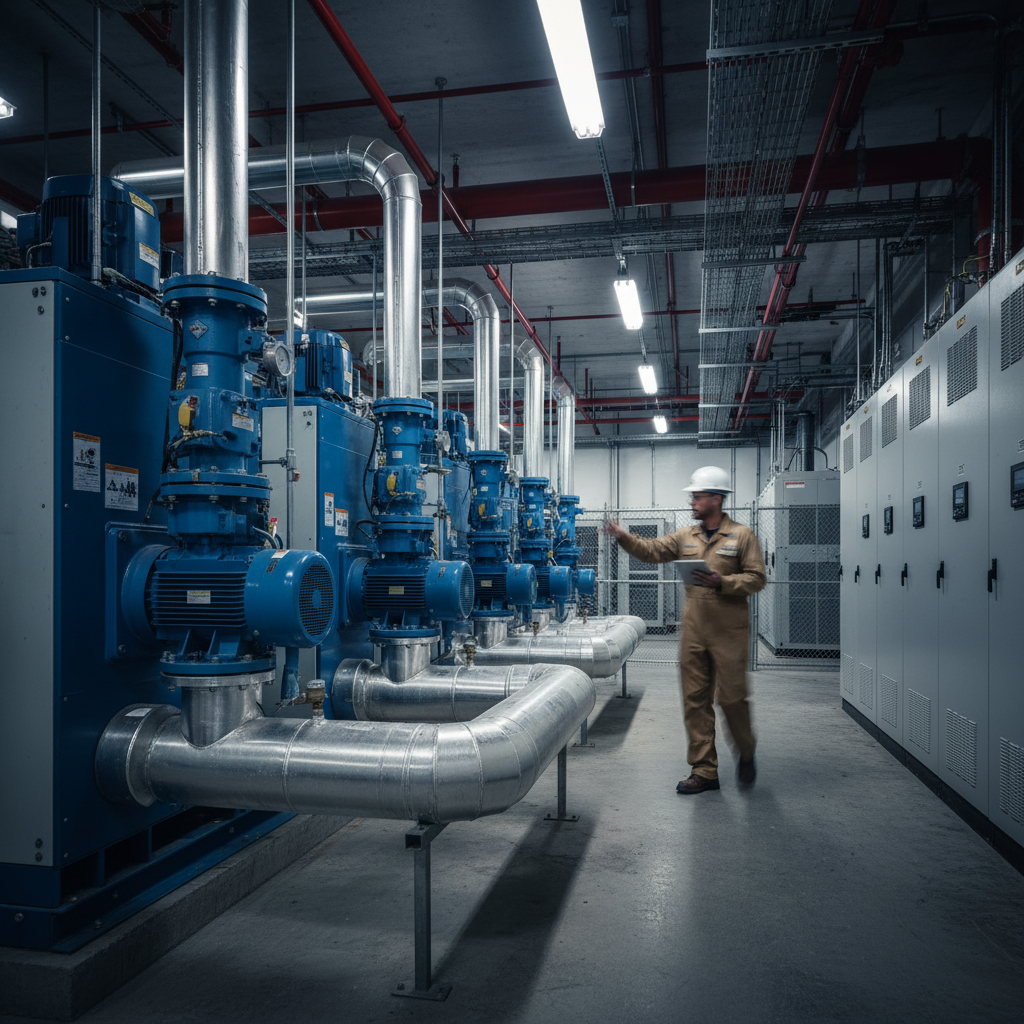
- Atlanta’s 250+ data centers run on precision cooling that most commercial HVAC contractors don’t understand — make sure your candidate has direct expansion (DX) and chilled water experience in mission-critical facilities.
- Vet for: Georgia Class II HVAC license, N+1 cooling redundancy knowledge, prior data center references, and ASHRAE 90.1 familiarity.
- Avoid contractors who treat data center work like office building work — humidity control, coolingload continuity, and ASHRAE TC 9.9 standards are not optional.
- This guide covers the 10-question checklist to use before signing a contract.
Atlanta is one of the fastest-growing data center markets in the country. The Greater Atlanta metro — particularly the College Park, Alpharetta, and Douglas County corridors — hosts more than 250 data center facilities operated by major players including Microsoft, Google, Meta, and Switch. Construction and retrofit demand is high.
The problem: most HVAC contractors in the Atlanta market do commercial office, industrial, or residential work. Data center cooling is a different discipline. Precision air handling, close-coupled cooling, N+1 redundancy, and compliance with ASHRAE Thermal Guidelines are not things you learn on a typical commercial job. This guide covers what to look for before you sign a contract.
7 Criteria Every Data Center HVAC Contractor Should Meet
- Georgia Class II HVAC license. Required for commercial refrigeration and comfort cooling work over $2,500. Verify at the Georgia Secretary of State licensing portal — don’t accept verbal assurances.
- Data center project portfolio. At least two completed data center HVAC projects in the past 36 months. Ask for the facility operator’s name and a contact reference.
- N+1 and 2N cooling redundancy experience. Your contractor should understand why redundant cooling systems matter and how to work in a live facility without disrupting existing load.
- DX and chilled water system expertise. Atlanta data centers use both configurations. Your contractor should be comfortable with direct expansion systems, CRAH units, chiller plant operations, and load bank testing.
- Humidity control knowledge. ASHRAE TC 9.9 specifies strict humidity ranges ( dew point and relative humidity). Contractors who don’t know these limits will specify the wrong equipment.
- 24/7 emergency response capability. Cooling failures in a data center are not 9-to-5 problems. Confirm on-call response times and service radius from your facility location.
- EPA Section 608 certification. Required for any contractor handling refrigerants. Relevant for facilities using DX cooling systems or modular cooling units.
Bottom line: Items 1 through 5 are non-negotiable for any data center HVAC job. Items 6 and 7 matter more for operating facilities than new construction — filter based on your project type.
The Atlanta DC Market: Unique Local Factors
Three factors make the Atlanta data center HVAC market distinct from other metros.
First: climate load. Atlanta’s hot, humid summers mean cooling systems run harder than in Northern Virginia or Chicago. Design heat loads and equipment sizing are different here. A contractor fresh from a northern market may undersize equipment.
Second: water availability. Several large Atlanta facilities rely on municipal water for evaporative cooling or chilled water generation. Georgia’s periodic drought conditions and Metro Water District restrictions can affect system design choices — your contractor needs to know what’s permitted in your county.
Third: permit and inspection environment. Fulton, DeKalb, Clayton, and Gwinnett counties each have separate permitting processes. HVAC installations for commercial data centers require mechanical permits and sometimes EPA compliance documentation for refrigerant-intensive installations.
Bottom line: Hire a contractor who has worked on data centers in the Atlanta metro specifically. Climate, water restrictions, and county permitting are local knowledge you can’t substitute with general DC experience.
10 Questions to Ask Before You Hire
- Can you provide your Georgia Class II HVAC license number for verification at the Georgia Secretary of State portal?
- How many data center HVAC projects have you completed in the Atlanta metro in the past 24 months?
- Have you worked on facilities with N+1 or 2N cooling redundancy? Can you describe a specific project?
- Are you familiar with ASHRAE TC 9.9 thermal guidelines for data processing environments?
- Do you have experience with both DX and chilled water cooling configurations?
- What is your on-call emergency response time for a facility in [your zip code or corridor]?
- Have you worked in a live data center without causing an outage event? Can I speak to that facility operator?
- Are you familiar with Fulton/DeKalb/Gwinnett county mechanical permitting requirements?
- Do you hold current EPA Section 608 certification? Which type (Universal, Type I, II, or III)?
- What is your experience with free cooling or economizer modes — relevant given Atlanta’s seasonal temperature swings?
How DataCenterUPS Vets Our Listings
- License status confirmed — Georgia Class II HVAC license verified via Georgia Secretary of State records.
- Insurance certificate verified annually — minimum $2M general liability and workers’ compensation coverage.
- DC project portfolio — at least one completed data center HVAC project, verified by reference contact.
Listing in our directory is not certification. We verify the basics — licensing, insurance, and project experience. Your due diligence remains your responsibility. Verify all claims, check references directly, and confirm permit experience for your specific county before signing a contract.
Browse Atlanta HVAC Contractors
Ready to start the search? Browse vetted HVAC contractors in Atlanta →