
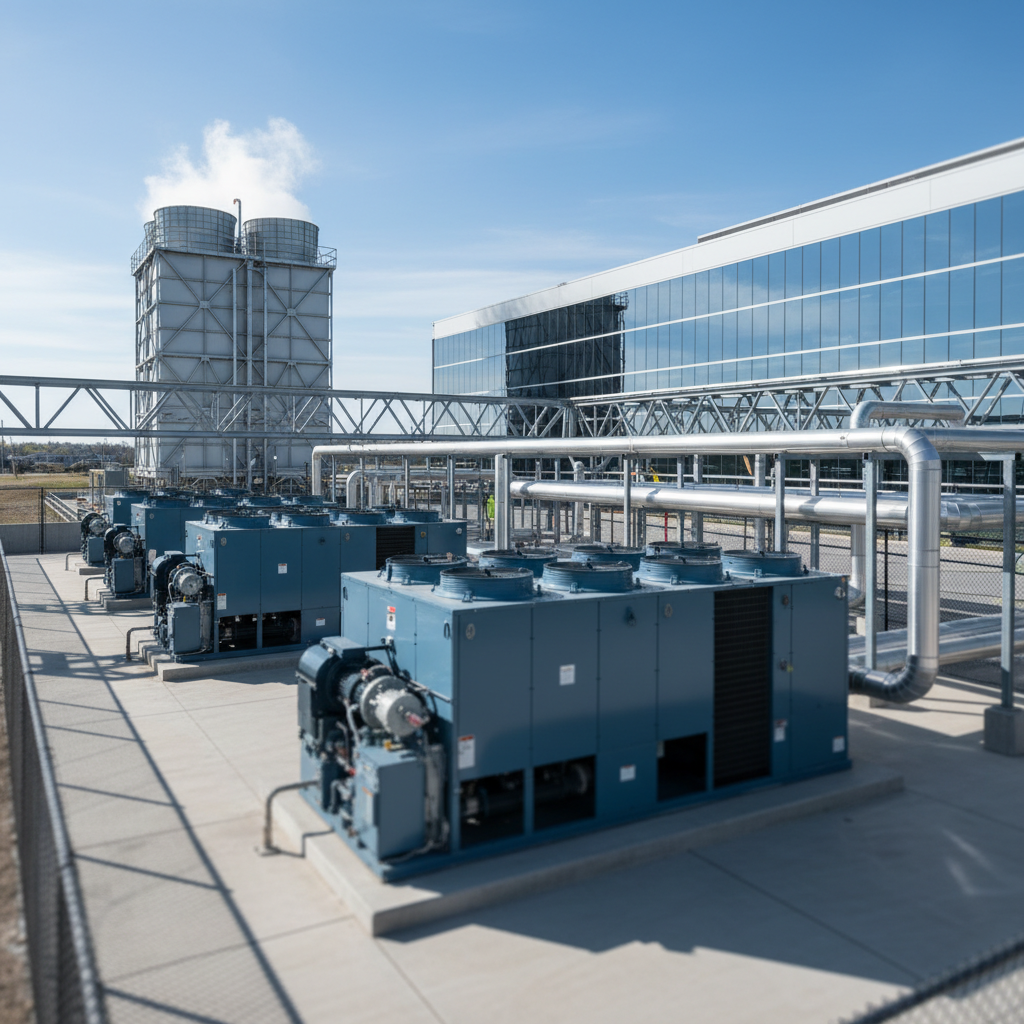
Phoenix is one of the fastest-growing data center markets in the country, and for good reason — cheap land, favorable tax conditions, and access to renewable energy have drawn hyperscalers and colocation providers into the desert. But operating a data center in a climate where summer temperatures routinely exceed 110°F presents a unique set of cooling challenges that most commercial HVAC contractors simply aren’t equipped to handle.
Finding a cooling contractor who actually understands chilled water systems, evaporative cooling, free cooling economizers, and the specific load demands of high-density compute is harder than it should be — even in a growing market like Phoenix. Most contractors you find in a general search have experience with office buildings or retail spaces. You need someone who has worked inside a data hall.
7 Criteria Every Data Center Cooling Contractor Should Meet
Before you hire anyone for your Phoenix data center cooling work, run them through this checklist. These aren’t optional nice-to-haves — they’re the baseline for a contractor who won’t cost you downtime.
1. Data center-specific project references. Ask for at least two completed projects in a live data center environment, not just commercial HVAC. Mission-critical cooling is fundamentally different from comfort cooling.
2. Experience with your specific cooling topology. Phoenix facilities often use combination systems — mechanical chiller plant plus free cooling economizers, adiabatic cooling, or liquid cooling for high-density racks. Make sure the contractor has hands-on experience with the system type you’re running.
3. Familiarity with ASHRAE guidelines for data centers. Thermal guidelines for data centers have evolved significantly. Your contractor should know ASHRAE’s thermal guidelines and how they apply to your mechanical design, not just copy what’s on the prints.
4. 24/7 emergency response capability. A cooling failure in Phoenix during July is a Tier 3/4 incident within hours. Your contractor needs on-call technicians available around the clock, with documented response time commitments in their contract.
5. Arizona contractor’s license and insurance minimums. Verify their AZ Registrar of Contractors license is current and covers commercial mechanical work. Insurance minimums for data center projects should be at least $2M general liability.
6. Load bank testing and performance verification experience. After installation or major service, load bank testing is standard practice in DC commissioning. Your contractor should either run this or coordinate with a testing firm directly.
7. Understanding of desert-specific permitting. Maricopa County and the City of Phoenix have specific mechanical and building permit requirements. Your contractor should have a track record navigating local AHJ (Authority Having Jurisdiction) inspections in the Phoenix metro.
The Phoenix DC Market: Why Cooling Infrastructure Matters More Here
Phoenix now hosts multiple major campuses from QTS, CyrusOne, Switch, Digital Realty, and others, plus growing hyperscale builds from the major cloud providers. The market has shifted from “emerging” to “established” in under a decade.
What makes cooling different in Phoenix compared to Northern Virginia or the Bay Area is the ambient temperature profile. Phoenix’s peak cooling season runs May through September, with design temperatures that can push 115°F dry bulb. This directly impacts the efficiency and capacity of standard air-cooled chiller systems. Facilities that rely on free cooling economizers get limited seasonal benefit compared to cooler climates.
The result is that Phoenix data centers tend to invest heavily in mechanical cooling infrastructure — dual cooling towers, more robust chiller plant redundancy, and in some cases liquid cooling or direct evaporative cooling for high-density zones. This means the contractors working on these systems need to understand how to maintain and troubleshoot complex multi-stage cooling plants, not just swap out a compressor on a rooftop unit.
Another local factor: water usage and Arizona’s regulatory environment around water rights. Large data centers in the Phoenix metro are under increasing scrutiny around water consumption, particularly for cooling tower makeup. This adds a compliance layer — especially for new construction — that contractors need to understand. Your cooling contractor should be able to speak to how their proposed solutions align with local water use regulations and sustainability goals.
10 Questions to Ask Before You Hire a Cooling Contractor in Phoenix
Use this list in your first conversation with a contractor. If they stumble on three or more, move on.
- Can you give me two project references from live data centers where you performed cooling system work?
- What’s your experience with chilled water plant design, installation, and service in a mission-critical facility?
- Do you have a current AZ Registrar of Contractors license? What classification?
- What are your emergency response time guarantees, and do you have local technicians or do you subcontract?
- Have you worked with free cooling economizers or adiabatic cooling systems in a DC environment?
- What’s your experience with load bank testing and DC commissioning protocols?
- How do you approach redundancy — do you spec N+1, 2N, or case-by-case?
- Are you familiar with Maricopa County mechanical permitting and AHJ inspection process?
- What’s your approach to cooling tower water treatment and compliance with local water use regs?
- Do you carry professional liability (E&O) insurance in addition to general liability?
How DataCenterUPS Vets Our Listings
Every cooling contractor in our Phoenix directory has been reviewed against a baseline set of criteria before being listed. We verify current AZ contractor licensing, confirm insurance coverage, and request documentation of at least one completed data center cooling project (installation, service contract, or emergency response work). We do not require contractors to be exclusive partners, certified by OEMs, or sign long-term agreements — we simply verify that what they claim on their listing is substantiated.
We do not perform ongoing audits of contractor performance. Our vetting is a starting point — it means a contractor cleared our initial review, not that we guarantee their work. You should still conduct your own due diligence, request references, and verify scope fit for your specific project.
Browse Phoenix Data Center Cooling Contractors
Ready to find a contractor? Start with our directory of vetted cooling contractors serving Phoenix-area data centers.